
Engineering Immersive Architecture: Strategic Deployment of Direct-View LED and Projection Mapping


India’s Professional Audio-Visual (ProAV) market is undergoing a structural shift, moving from simple hardware procurement toward outcome-driven visual infrastructure. Driven by the rapid expansion of Global Capability Centers (GCCs), AI research labs, and cultural tourism projects across Tier-II and Tier-III cities, enterprise buyers are prioritizing lifecycle value, total cost of ownership (TCO), and operational uptime over upfront pricing. Today’s deployments increasingly rely on application-specific technology choices—ranging from direct-view LED video walls in mission-critical command centers to projection mapping installations in immersive heritage venues—backed by strong local technical support and reliable serviceability.
This evolution is further highlighted by strong buyer commitment at key industry forums, where live project budgets demonstrate a clear demand for seamless collaboration and immersive storytelling tools. As visual environments become central to both corporate innovation and public engagement, success depends on integrating high-resolution display hardware with advanced image processing, calibration, and content management systems. “The conversation is moving beyond ‘What does it cost?’ to ‘What value will it deliver throughout its lifecycle?’ and that is a positive development for the industry,” said Rishubh Nayar, ProAV Sales Director for India at Christie Digital.
1) Why is ProAV buying shifting from upfront price to lifecycle value, including TCO, reliability and serviceability?
India’s ProAV market remains highly competitive, but customers are becoming increasingly sophisticated in how they evaluate technology investments. Rather than focusing solely on upfront acquisition costs, many organizations are now considering the total cost of ownership, including reliability, energy efficiency, maintenance requirements, operational uptime, and long-term support.
This shift is particularly evident in mission-critical environments such as command-and-control centers, transportation infrastructure, corporate facilities, and public venues, where system downtime can have significant operational consequences. In these applications, reliability and serviceability often have a much greater impact on long-term costs than the initial purchase price.
Economic factors have also played a role. Currency fluctuations and pricing volatility have encouraged organizations to make more deliberate purchasing decisions and seek solutions that can deliver predictable performance over many years.
As a result, customers are increasingly looking for proven technologies backed by strong local support, comprehensive warranties, and readily available technical expertise. The conversation is moving beyond “What does it cost?” to “What value will it deliver throughout its lifecycle?” and that is a positive development for the industry.
2) How are application-specific requirements shaping technology choices, including where projection or direct-view LED make the most sense?
Customers are increasingly selecting technologies based on application requirements rather than following a one-size-fits-all approach. The discussion today is less about projection versus direct-view LED and more about choosing the right solution for the intended outcome.
Direct-view LED continues to gain traction in command-and-control centers, corporate environments, transportation hubs, and public spaces where brightness, visibility, scalability, and continuous operation are critical. Its flexibility also makes it well suited for experience centers and large-format visual displays.
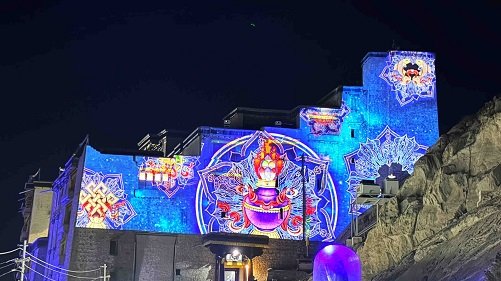
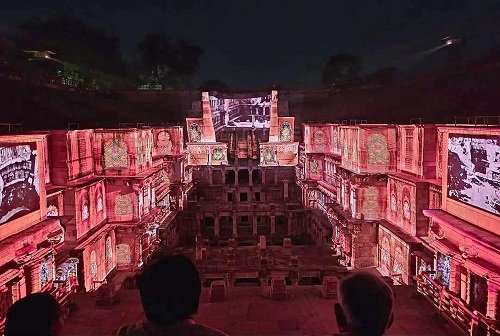
Projection remains the preferred choice for many immersive environments, including museums, visitor attractions, cultural destinations, projection mapping installations, and themed experiences. It offers unique creative possibilities, particularly when content needs to be integrated with architecture, physical objects, or unconventional surfaces.
Increasingly, we are also seeing hybrid deployments where projection and LED are used together to achieve specific design and storytelling objectives. Ultimately, customers are making technology decisions based on audience engagement, environmental conditions, operational requirements, and desired outcomes rather than selecting a technology category first and designing around it.
3) How are GCCs, AI labs and experience centres creating new visual infrastructure requirements?
The rapid expansion of Global Capability Centers (GCCs) is creating entirely new use cases for ProAV technologies in India. These facilities are no longer back-office operations; many have evolved into innovation hubs focused on artificial intelligence (AI), product development, engineering, analytics, and customer engagement.
As organizations invest in AI labs, briefing centers, and experience spaces, there is growing demand for advanced visualization environments that can communicate complex ideas and showcase capabilities in engaging ways. These spaces require high-resolution displays, collaborative visualization systems, interactive touch technologies, and flexible content-sharing platforms.
What makes these environments different is that they often serve multiple functions, acting as demonstration facilities, executive briefing centers, collaboration spaces, and customer engagement venues simultaneously. This places greater emphasis on visual quality, seamless user experiences, and system flexibility.
The result is a growing demand for display technologies that can support both collaboration and storytelling, helping organizations communicate innovation, accelerate decision-making, and create memorable experiences for customers, partners, and stakeholders.
4) Why are museums, tourism destinations, heritage sites and public venues emerging as important areas of ProAV investment, including in Tier-II and Tier-III cities?
India possesses an extraordinary wealth of cultural, historical, and linguistic heritage, creating unique opportunities for technology-enabled storytelling. Increasingly, organizations and government agencies are using ProAV technologies to bring these stories to life in ways that are more immersive, engaging, and accessible to modern audiences.
A key driver is the growing investment in tourism and destination development. Museums, heritage sites, and public attractions are no longer viewed simply as places that display information. They are becoming experience-driven environments designed to encourage deeper engagement and increase visitor appeal.
Projects such as the permanent projection mapping installations at Rani-ki-Vav in Gujarat and Leh Palace in Ladakh demonstrate how visual technologies can enhance cultural storytelling while preserving the integrity of historic sites.
Importantly, this trend is extending beyond major metropolitan areas. Tier-II and Tier-III cities are increasingly investing in museums, cultural attractions, and public venues to strengthen tourism, celebrate local heritage, and create new economic opportunities. This is expanding the geographic reach of ProAV adoption across India and creating a growing pipeline of immersive experience projects.
5) What does InfoComm India 2026 reveal about the direction of India’s ProAV market?
InfoComm India 2026 reinforced the strength and maturity of India’s ProAV market. More importantly, it demonstrated that growth is being driven not just by attendance, but by serious buyers with active projects and approved budgets. According to AVIXA, the event attracted 13,275 business attendees from 49 countries, while 54% of attendees arrived with approved AV budgets and invited buyers represented approximately US$328.5 million in live project opportunities.
From Christie’s perspective, the show highlighted three important trends. First, demand for immersive experiences continues to grow across museums, experience centers, cultural destinations, and public venues, aligning closely with our projection and visualization portfolio. Second, direct-view LED remains a rapidly expanding category as customers seek larger, brighter, and more flexible display solutions. Christie reflected this trend by showcasing an expanded LED portfolio at the event. Finally, artificial intelligence is becoming part of the broader ProAV conversation, not as a standalone technology but as an enabler of smarter collaboration, content creation, and system management.
Overall, InfoComm India 2026 demonstrated that the market is becoming more sophisticated, more experience-focused, and increasingly driven by tangible business outcomes rather than technology adoption alone.
