
Solving the Supply Chain Visibility Gap: How Connected Data Drive Operational Resilience

The enterprise landscape is undergoing a structural shift from traditional outsourcing to AI-enabled operational transformation, changing how end-to-end processes are managed across supply chain, procurement, and data operations. While AI tools accelerate data analysis and pattern recognition, technology alone cannot fix operational gaps. Organizations that derive measurable value start with clearly defined business problems, build connected data foundations across siloed functional systems, and redesign core workflows around human-agent collaboration.
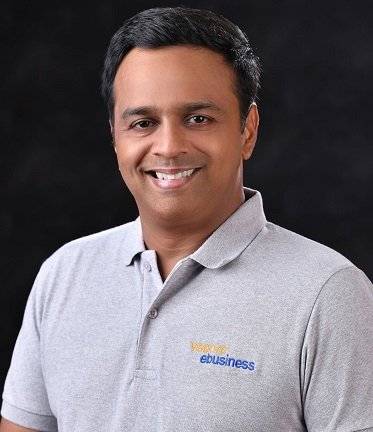
Achieving true operational resilience requires closing visibility gaps and moving from isolated AI pilots to scalable, integrated workflows. As generative and agentic AI take on deeper operational roles—from inventory forecasting and data enrichment to automated process monitoring—enterprises must establish clear governance guardrails to balance automated execution with human judgment. Ultimately, genuine transformation is measured not by tool adoption, but by faster decision-making, reduced operational friction, and improved business outcomes. “The real measure is what changes after AI is introduced. Are decisions faster? Are errors lower? Is visibility better? Are teams spending less time on repetitive work? Those outcomes will separate AI adoption from genuine AI-led transformation,” said Siva Balakrishnan, Founder and CEO of Vserve.
Q1. As a founder who has spent over two decades working with global enterprises, what leadership lessons have remained constant despite the rapid evolution of technology?
Over the last two decades, technology has changed almost everything around how businesses operate. The fundamentals of leadership, however, have stayed quite consistent. I have always believed that leaders need to stay close to the customer and understand the work happening behind the numbers. A dashboard can show performance, but it does not always explain why something is happening.
That requires people who understand the operation. Building the right team has also remained important for me. Technology may help to speed up things, but there must be somebody who will make the decision. Vserve has strengthened my understanding of good leadership which consists of creating clarity, allowing people to own and execute.
Q2. You’ve witnessed the shift from traditional outsourcing to technology-led, AI-enabled business operations. What do you see as the biggest transformation taking place today?
The biggest change is that businesses are moving from outsourcing activities to improving how entire processes work. Earlier, the focus was often on moving a defined task to another team and improving cost or turnaround time. Today, businesses are looking at the full workflow. They want technology, automation and human expertise to work together. We see this clearly across e-commerce, supply chain, procurement, inventory and data operations.
AI is accelerating that shift because it can handle large volumes of information and identify patterns much faster. But technology alone does not transform an operation. The process has to change with it. That is where we see the real opportunity at Vserve. The focus is increasingly on better visibility, better decisions and stronger execution.
Q3. With AI adoption accelerating across supply chains and enterprise operations, what separates organisations that generate measurable value from those that struggle to move beyond experimentation?
The starting point is usually very simple. What business problem are you trying to solve? Organizations that create measurable value tend to have a clear answer. It could be reducing inventory gaps, improving demand forecasting, speeding up procurement or reducing manual data work. They also understand the quality of the data going into the system. Many AI projects struggle because the data is fragmented or the output does not connect to an actual workflow.
I have seen that technology can identify a problem very quickly, but someone still has to act on that information. That is the difference. At Vserve, we look at AI through the operational process. The value comes when intelligence leads to a measurable change in how work gets done.
Q4. Vserve’s Supply Chain Visibility Gap Report 2026 highlights the challenge of fragmented data and disconnected systems. Why does visibility remain difficult for enterprises despite years of digital transformation?
A lot of digital transformation has happened within individual functions. Procurement has one system. Inventory may have another. Suppliers use their own platforms, while order processing and fulfillment can run through separate systems. Each system may work well independently. The problem starts when the business needs one view across all of them. This is one of the issues highlighted in Vserve’s Supply Chain Visibility Gap Report 2026.
Visibility is not created by simply adding another technology layer. It depends on connected data, consistent processes and clear ownership. When those pieces are missing, enterprises have plenty of information but still struggle to see what is actually happening across the supply chain.
Q5. What are some of the biggest mistakes enterprises make when trying to scale AI across supply chain and business operations?
The first pitfall that one needs to avoid when scaling the AI is making sure that the underlying process is efficient. Otherwise, AI may just speed up the inefficiency. The second is underestimating data quality. An AI system cannot produce reliable recommendations when the information feeding it is incomplete or inconsistent. Another mistake is keeping the business users away from the implementation. Supply-chain and operations teams understand the exceptions that may never appear in a process document. Their input matters.
We also need to move beyond pilots. A successful experiment is not necessarily a successful business application. At Vserve, we look at whether AI can improve a real process, whether people can act on the output and whether the result can be measured consistently.
Q6. With global supply chains facing disruptions, changing trade dynamics and increasing complexity, what capabilities will businesses need to build greater operational resilience?
Resilience starts with knowing what is happening across the operation. Businesses need visibility into inventory, suppliers, purchase orders, fulfillment and dependencies across the supply chain. They also need the ability to identify an exception early. If a supplier is likely to miss a commitment, the business should know before that delay affects inventory or customer orders. This requires better data and faster coordination between teams. We also need more flexibility in procurement, supplier management and fulfillment.
Technology can help by identifying patterns and reducing the time needed to respond. But resilience is ultimately an operating discipline. It comes from building processes that can adapt when conditions change. That is increasingly important for the businesses we support through Vserve.
Q7. How do you see technologies such as generative AI and agentic AI changing procurement, inventory management, data operations, and other enterprise functions over the next few years?
I expect AI to move deeper into the workflow rather than remain a separate tool. In procurement, generative AI can help teams work through supplier information, purchase requirements and large volumes of data. In inventory, AI can identify demand changes and flag potential shortages earlier. In data operations, it can help enrich, classify and validate product information at scale. Agentic AI could take the next step by monitoring a process and initiating defined actions when certain conditions are met. But enterprises will need controls around those actions.
Not every decision should be automated. There has to be a clear boundary between what AI can execute and where human approval is required. The opportunity we see through Vserve is to use these technologies where they can remove operational friction and improve decision speed.
Q8. Looking ahead, what will distinguish truly AI-driven enterprises from organisations that have simply added AI tools to existing processes?
The difference will be visible in how the business operates. An AI-driven organization will redesign processes around what the technology can actually improve. It will not simply add a chatbot, automation tool or AI assistant to an existing workflow. For example, identifying an inventory risk is useful only if the business can respond quickly. Enriching product data matters when that information improves listings, search or marketplace operations.
Forecasting matters when procurement and inventory teams can act on the forecast. This is how I look at AI adoption through our work at Vserve. The real measure is what changes after AI is introduced. Are decisions faster? Are errors lower? Is visibility better? Are teams spending less time on repetitive work? Those outcomes will separate AI adoption from genuine AI-led transformation.
